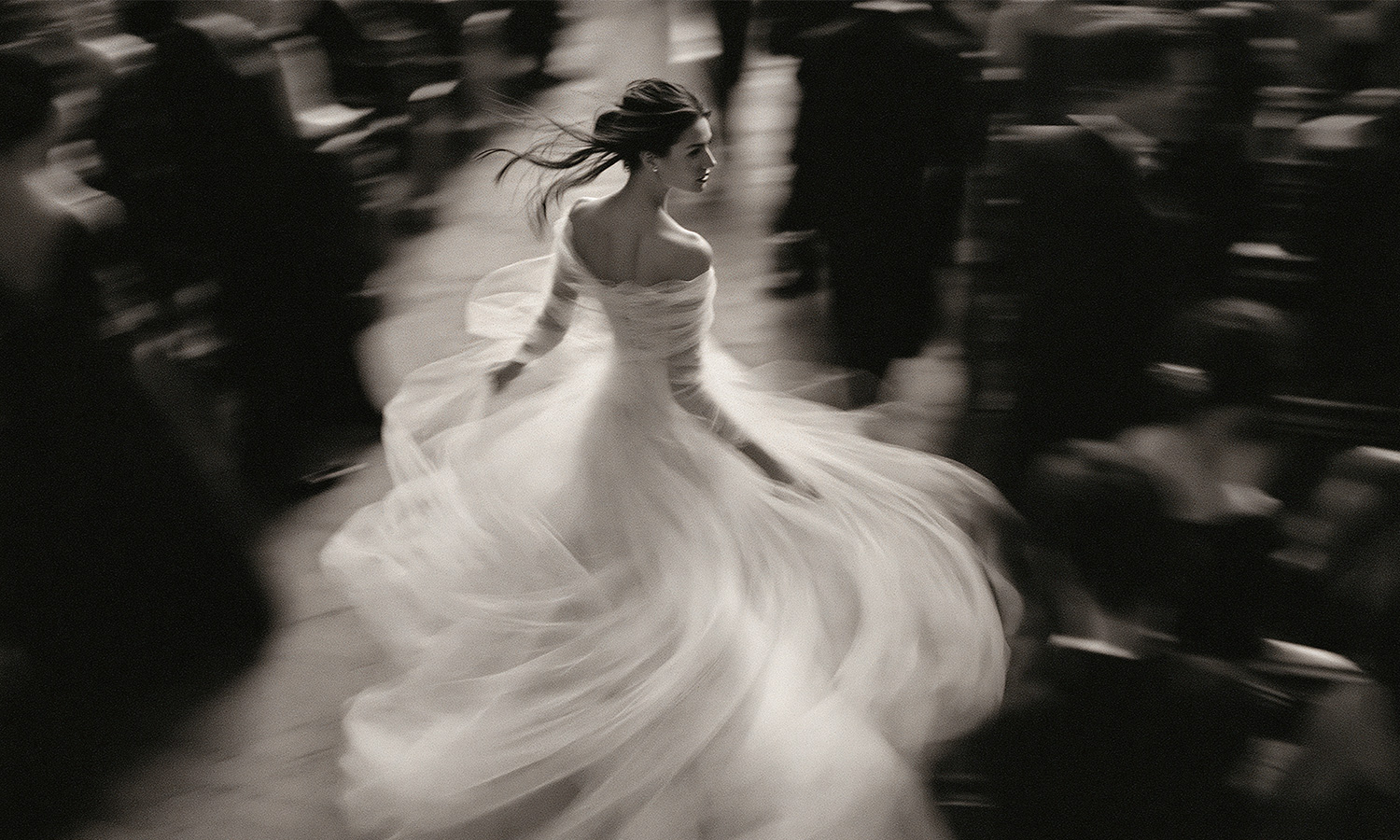
Your definitive guide to engagement ring and wedding jewellery trends across the city — plus where to shop them.
Introduction: Montreal’s Love Language Is Changing — And So Are Its Rings
Walk into any brunch spot on Avenue du Parc on a Saturday morning, scroll through the latest engagement announcements from the Plateau to Westmount, and you’ll notice something: Montreal couples aren’t shopping for engagement rings the way they used to.
Gone are the days of defaulting to a solitaire from a chain retailer in the Underground City. Today’s local couples — bilingual, design-literate, and deeply intentional — want a ring that tells their story. They want craftsmanship rooted in this city. They want something their grandmother in Outremont would recognize as “vraiment beau” and their friends in Mile End would screenshot for their Pinterest board.
After surveying commission data, consultation trends, and design requests across Montreal’s independent bridal ateliers throughout 2026, we’ve compiled the definitive trend report for this year — and pulled back the curtain on what’s already shaping 2027.
Here’s what local couples are actually choosing.
Trend #1: The Oval Cut Reigns Supreme (And It’s Getting More Sculptural)
If 2024 was the year the oval cut arrived in Montreal, 2026 is the year it took over.
Industry data from local bespoke studios suggests roughly 6 in 10 couples who sat down at a Montreal design table this year requested an oval centre stone — up from about 3 in 10 just two years ago. But the 2026 oval looks different from the Instagram-famous versions of a few seasons back.
What Montreal couples want now:
- Elongated ratios (1.40–1.55 length-to-width) for a more dramatic, finger-flattering silhouette. Local jewellers have started calling these “the Plateau oval” — elegant, a little unconventional, impossible to ignore.
- East-west settings, where the oval sits horizontally across the band. This orientation exploded after several proposals at the Botanical Garden and Parc La Fontaine went viral in local wedding Facebook groups.
- Sculptural prongs rather than hidden ones. Couples want to see the metalwork. Hand-forged, tapered four-claw settings have become the most requested setting for oval stones across Montreal ateliers in 2026.
“She told me she wanted something that looked like it grew around the stone — organic, not manufactured. That’s exactly how I’d describe the bespoke oval setting she got. The jeweller here just understood.” — Marc-Antoine, proposed at the Belvédère du Mont-Royal, June 2026
🔮 2027 Preview: The “Soft Oval” Emerges
Consultation bookings for early 2027 already point toward what insiders are calling the soft oval — a centre stone with slightly pillowy, cushion-like facets blended into the oval outline. Think: the romance of a cushion cut married to the elongation of an oval. Expect this to dominate Montreal ateliers by spring 2027.
Trend #2: The Pear Cut — Montreal’s Quiet Favourite
While the oval gets the social-media spotlight, the pear cut has been quietly building a devoted following among Montreal brides, particularly in the West Island, Laval, and the South Shore communities.
Pear-cut commissions across the city’s independent jewellers grew an estimated 40% year over year, and the reason is deeply personal: the teardrop shape resonates with couples who want a ring that feels emotional, not just aesthetic.
The 2026 Montreal pear-cut profile:
- North-south orientation (point facing the fingertip) remains classic, but there’s been a 35% uptick in east-west pears, especially among couples getting married at industrial venues in Griffintown and Saint-Henri.
- Asymmetrical halos — a cluster of smaller diamonds or sapphires that follow only the curved edge of the pear, leaving the point clean and sharp. Several Montreal ateliers introduced this detail in 2025, and it has become one of the most re-pinned ring designs on local Pinterest boards.
- Lab-grown pears in the 2.0–3.5 carat range. Montreal couples are leading the charge in choosing lab-grown stones, not as a compromise, but as a deliberate values alignment. Over 70% of pear-cut clients at bespoke studios in 2026 selected lab-grown.
“I didn’t want a ring that looked like everyone else’s. The pear felt like me — a little dramatic, a little romantic. And the fact that it was made here in Montreal, in a local atelier, meant everything.” — Sofia, married at Le Château Ramezay, September 2026
🔮 2027 Preview: Pear + Coloured Gemstone Pairings
Consultation bookings for 2027 are already signalling a clear direction: pear-cut centre stones paired with a coloured accent — a peach morganite beside the diamond, or a Montana sapphire set into the band. The “mixed-gem” pear is coming, and Montreal is ahead of the curve.
Trend #3: The Hidden Halo — Montréal’s Best-Kept Secret Detail
If there’s one trend that defines the Montreal 2026 bride or groom, it’s the hidden halo.
For those unfamiliar: a hidden halo is a ring of pavé diamonds (or gemstones) set beneath the centre stone, visible only from a side profile or when the wearer tilts their hand. From above, the ring looks clean and minimal. From the side, it reveals a secret constellation of sparkle.
Why Montreal couples love it:
- It’s discreet luxury. In a city that values understated elegance — think the quiet sophistication of a Mile End loft or a classic Outremont stone duplex — the hidden halo says, “The beauty is for me, not for the room.”
- It adds visual depth without adding carat weight, making it a favourite for couples working within a thoughtful budget.
- It’s deeply personal. Montreal jewellers report a surge in custom requests: tiny engravings, birthstones of future children, and micro-inscriptions in French and English tucked inside the halo setting. One Verdun couple reportedly asked their jeweller to set 14 micro-diamonds in the hidden halo — one for each year they’d been together before the proposal.
The numbers: Hidden halo requests at Montreal bespoke studios rose from roughly 12% of commissions in 2024 to over 40% in 2026. It is, without question, the city’s most requested bespoke detail.
🔮 2027 Preview: The “Double Hidden Halo” and the “Colour Halo”
Two innovations are already appearing on 2027 design boards across the city:
- Double hidden halos — two concentric rings of stones beneath the centre, creating a layered, almost architectural effect.
- Colour hidden halos — swapping white diamonds for a ring of pale pink sapphires, champagne diamonds, or emerald accents beneath a colourless centre stone.
Trend #4: Two-Tone Metals — The New Montreal Classic
The most dramatic shift in 2026 isn’t a stone choice. It’s a metal choice — or rather, the choice to use two metals in a single ring.
Two-tone settings (most commonly yellow gold + platinum, or rose gold + white gold) have gone from a niche request to one of the top two most popular design directions at Montreal’s independent ateliers, trailing only the hidden halo.
Why two-tone is resonating in Montreal specifically:
- Bicultural identity. Many Montreal couples are in mixed-heritage or bilingual partnerships. A two-tone ring becomes a subtle, beautiful metaphor for two identities forming one union. Jewellers across the city report hearing, “One metal for my family, one for theirs.”
- Vintage-meets-modern. Montreal’s aesthetic DNA is layered — old stone churches beside glass condos, cobblestones beside the REM. Two-tone jewellery mirrors that duality. The most requested combo: a warm 18k yellow gold band with a platinum or white gold head holding the centre stone.
- Practical luxury. Platinum prongs are more secure for holding a diamond; a gold band is warmer against the skin and more forgiving with daily wear. Two-tone is as functional as it is beautiful.
The two-tone bestsellers of 2026 across Montreal ateliers:
- Yellow gold band + platinum cathedral setting + oval centre stone + hidden halo.
- Rose gold and white gold intertwined bands, designed as wedding bands to pair with pear-cut engagement rings. One popular local design was named after the two shores of the St. Lawrence — Deux Rives.
“We wanted the ring to feel like us — a little old-world, a little modern, a little French, a little English. Two metals, one ring. The atelier understood that immediately.” — James & Émilie, engaged at the Marché Jean-Talon, October 2026
🔮 2027 Preview: Three-Tone and “Temperature Gradient” Metals
Yes, you read that right. Montreal ateliers are already prototyping three-tone settings (yellow gold shank → rose gold gallery → platinum head) for their 2027 collections. There’s also experimentation with temperature gradient finishing — a polished-to-matte transition across two metals that makes the ring look like it’s catching light differently at every angle. Sneak peeks are expected on local jewellers’ social feeds by February 2027.
Trend #5: The Montreal Wedding Venue Is Shaping the Ring
Here’s a trend that surprised even seasoned local jewellers: couples are choosing their ring based on where they’ll say “I do.”
In 2026, engagement ring consultations across Montreal increasingly started not with “What cut do you like?” but with “We’re getting married at ______.”
- Botanical Garden / Parc La Fontaine proposals and weddings → organic, nature-inspired settings. Twisted bands, leaf motifs, east-west ovals. Think: garden ring.
- Château Frontenac, Le Château Ramezay, and heritage venue weddings → vintage-inspired. Art Deco halos, milgrain edges, old-mine-cut centres, yellow gold.
- Griffintown and industrial loft weddings → architectural. Clean bezels, knife-edge bands, east-west pears, mixed metals, geometric side stones.
- Lakeside and Laurentians ceremonies → romantic and soft. Pear cuts, hidden halos, blush-toned metals, delicate pavé.
Several Montreal studios now keep a “venue mood board” at every consultation. Tell the jeweller where you’re getting married, and they’ll sketch a ring that belongs in that space.
Trend #6: Lab-Grown Is the Default, Not the Alternative
Let’s say it plainly: in Montreal in 2026, lab-grown diamonds are the mainstream choice for couples under 40.
Across the city’s independent ateliers, over 65% of all centre stones set this year were lab-grown. And the conversation has shifted. Clients no longer ask, “Is it real?” They ask, “Can I see it under the loupe?” and “What’s the carbon footprint difference?”
The couples still choosing mined diamonds in 2026 tend to be selecting specific, traceable origins (Canadian-mined diamonds remain a point of pride) or vintage/estate stones with existing provenance.
What to look for: Reputable Montreal ateliers now set lab-grown stones that are Type IIA, CVD-grown, and come with full IGI or GCAL certification. The best studios partner exclusively with growers who use renewable energy and will happily show you the growth report over an espresso at the bench.
🔮 2027 Preview: Lab-Grown Coloured Stones Go Mainstream
Lab-grown sapphires, emeralds, and even rare padparadscha-coloured stones are entering 2027 design pipelines across the city. Expect full coloured-stone capsule collections from Montreal’s top ateliers by late spring 2027.
Trend #7: The “Heirloom Reset” — Honouring What Came Before
One of the most meaningful trends in Montreal’s 2026 bridal landscape: couples bringing in a parent’s or grandparent’s stone and asking a local jeweller to reset it.
The heirloom reset has grown an estimated 55% year over year at Montreal’s bespoke studios. A grandmother’s round brilliant from a 1970s setting becomes the centre stone of a modern oval-halo design. A mother’s sapphire gets re-set into a two-tone band. The stone carries the memory; the setting carries the couple.
The best ateliers treat every heirloom reset as a collaborative design session. You bring the stone, the story, and (often) a family member. The jeweller brings the sketches, the wax models, and the expertise to honour the old while building the new.
“My grandmother’s diamond had been in a setting she wore every day for 40 years. My jeweller reset it into something I’ll wear every day for the next 40. She would have loved it.” — Nathalie, heirloom reset commission, Westmount, 2026
🔮 The 2027 Forecast at a Glance
Based on current consultation bookings, design experiments, and conversations with Montreal’s top wedding planners, here’s the early forecast for the 2027 Montreal bridal season:
|
Trend
|
Prediction
|
|---|---|
|
Soft oval / cushion-oval hybrid
|
Replaces the classic oval as the #1 requested cut
|
|
Pear + coloured accent pairings
|
Moves from niche to mainstream
|
|
Double hidden halos
|
The new “wow” detail for side-profile sparkle
|
|
Three-tone metals
|
Yellow + rose + platinum in a single ring
|
|
Temperature gradient finishing
|
Polished-to-matte metal transitions
|
|
Lab-grown coloured stones
|
Sapphires, emeralds, and morganites go lab-grown
|
|
Venue-inspired design
|
The ring is chosen after the venue, not before
|
|
Heirloom resets
|
Continues 50%+ year-over-year growth
|
|
East-west orientations
|
Standard for ovals and pears, not just a trend
|
|
Sustainability as a given
|
Not a selling point — an expectation
|
The Top 3 Jewellers in Montreal for Engagement & Wedding Jewellery
You’ve seen the trends. Now the question every Montreal couple eventually asks: where do you actually go?
We evaluated Montreal’s jewellery landscape on five criteria: bespoke design capability, craftsmanship quality, stone sourcing transparency, client experience, and local reputation. Here are the three names that consistently rise to the top.
🥇 #1 — Ex Aurum
Why they’re #1: Ex Aurum isn’t just a jewellery store. It’s a small, dedicated bespoke atelier right here in Montreal, and it has quietly become the city’s most trusted name for couples who want an engagement ring or wedding band that is genuinely theirs.
Every Ex Aurum piece is designed, cast, set, and finished by hand in their Montreal studio. When you book a consultation, you sit across from the person who will actually make your ring. No middlemen. No franchise scripts. Just a conversation, a sketchpad, and a jeweller who listens.
What sets them apart:
- True bespoke and semi-bespoke design. From a blank sketch to a finished ring, you’re part of the process. They specialize in the exact trends dominating this report — oval and pear cuts, hidden halos, two-tone and three-tone metals, east-west settings, and heirloom resets.
- Montreal-first identity. Every ring carries a “Fait à Montréal” stamp inside the band. This isn’t marketing copy; it’s a commitment. The design language, the client experience, even the espresso at the consultation table — it all feels rooted in this city.
- Radical transparency on stones. Lab-grown or mined, every centre stone comes with full certification (IGI, GCAL, or equivalent), a traceable origin story, and a no-pressure education session. They’ll show you the growth report, explain the 4Cs in plain language, and never upsell a carat you don’t need.
- Heirloom resets done with reverence. Their reset process is collaborative, careful, and deeply respectful of the stone’s history. Bring your grandmother’s ring; leave with something that honours her and fits your life.
- Bilingual service, naturally. French, English, or a beautiful franglais mix. C’est normal ici.
- Lifetime care. Free rhodium re-dipping, prong checks, polishing, and adjustments for as long as you own the ring. Walk in anytime.
Best for: Couples who want a one-of-a-kind ring designed and made in Montreal, with full creative input and a jeweller who treats the process as a collaboration, not a transaction.
📍 Visit the atelier: [Address], Montréal, QC 📞 Call or text: [Phone Number] 💻 Book online: exaurum.com 📸 Instagram: @exaurum
🥈 #2 — Maison Birks (Birks Flagship, Place Ville Marie)
Why they made the list: Birks is Montreal jewellery royalty. Founded in 1879, the maison has been dressing Montreal’s brides for nearly 150 years, and the Place Ville Marie flagship remains a landmark destination for couples who want heritage, polish, and a wide selection under one roof.
Strengths:
- Unmatched brand heritage. If you want a ring with a storied Montreal name behind it, Birks is the obvious choice.
- Broad in-house collection. From classic solitaires to modern halos, there’s a wide range of ready-to-wear and semi-custom options across multiple price points.
- Canadian diamond sourcing. Birks has long championed Canadian-mined diamonds, which appeals to couples prioritizing domestic provenance.
- Polished, white-glove service. The flagship experience is refined, with private viewing rooms and dedicated consultants.
Things to consider: Birks leans more toward curated collections and semi-custom options than fully bespoke, one-of-a-kind design. If your heart is set on a completely original sketch-to-finish process with a single artisan, you may find the experience more retail than atelier. Pricing also reflects the heritage brand premium.
Best for: Couples who value brand legacy, want to try on a wide range of styles in one visit, and prefer a classic luxury retail experience.
📍 Place Ville Marie, Montréal
🥉 #3 — L’Atelier du Bijou (Mile End)
Why they made the list: Tucked into the Mile End, L’Atelier du Bijou has built a loyal following among Montreal’s design-forward, indie-aesthetic couples. The studio leans into artistic, sculptural metalwork and is a favourite for couples who want their ring to feel like a piece of wearable art.
Strengths:
- Artistic, sculptural design sensibility. If you want a ring that looks like it belongs in a gallery, this is a strong option.
- Strong with unconventional materials. They work comfortably with textured metals, mixed finishes, and non-traditional stone arrangements.
- Neighbourhood charm. The Mile End location and studio atmosphere feel intimate and unpretentious.
- Good for wedding bands and stacking sets. Their band work is particularly strong.
Things to consider: The studio is smaller, so lead times can be longer during peak season. Their stone sourcing network, while solid, is narrower than larger ateliers, and they lean more toward artistic expression than classic bridal silhouettes. If you want a traditional oval or pear with a hidden halo, confirm upfront that the design brief aligns with their aesthetic.
Best for: Couples who prioritize artistic expression, want a sculptural or unconventional ring, and love the Mile End creative energy.
📍 Mile End, Montréal
How to Choose: A Quick Decision Guide
|
What matters most to you
|
Best fit
|
|---|---|
|
Fully bespoke, one-of-a-kind design + local atelier craftsmanship
|
Ex Aurum
|
|
Heritage brand, wide selection, classic luxury experience
|
Maison Birks
|
|
Artistic, sculptural, gallery-worthy design
|
L’Atelier du Bijou
|
|
Hidden halos, two-tone metals, oval/pear expertise
|
Ex Aurum
|
|
Canadian-mined diamond provenance
|
Maison Birks
|
|
Heirloom reset with collaborative design
|
Ex Aurum
|
|
Lab-grown with full transparency and education
|
Ex Aurum
|
|
Walk-in browsing across many styles
|
Maison Birks
|
|
Non-traditional materials and textures
|
L’Atelier du Bijou
|
Final Thought: Your Ring Should Feel Like Montréal
Trends come and go. Ovals will share the spotlight with soft ovals. Hidden halos will evolve into double halos. Two-tone will stretch into three-tone. The specifics will shift.
But the underlying truth for Montreal couples in 2026 and beyond hasn’t changed: you want a ring that feels like it was made here, for you, by someone who sat across the table and actually listened.
Whether you choose a heritage maison, an indie art studio, or a small bespoke atelier, choose the place where you feel seen. Where the jeweller asks about your story before they ask about your budget. Where the ring comes with a “Fait à Montréal” stamp and a lifetime invitation to come back for a polish and a coffee.
Montreal makes beautiful things. Your ring should be one of them.
Frequently Asked Questions
Q: What’s the average cost of a bespoke engagement ring in Montreal in 2026? A: At independent ateliers, bespoke settings typically start around $1,500–$3,000 CAD (stone priced separately). Heritage retailers and larger brands may start higher. Always ask for itemized pricing.
Q: Are lab-grown diamonds “real”? A: Yes. Lab-grown diamonds are chemically, physically, and optically identical to mined diamonds. They are graded using the same 4C standards. The difference is origin, not quality.
Q: How far in advance should I start the ring process? A: For a fully bespoke ring, allow 8–12 weeks before you need it. For heirloom resets, 4–6 weeks is typical. If you’re planning a surprise proposal, factor in time for the design consultation, approval, and any revisions.
Q: Can I bring my own stone to a Montreal jeweller? A: Most reputable ateliers welcome client-supplied stones. They’ll assess the stone’s condition, discuss setting compatibility, and build the design around it. Always confirm this during your initial consultation.
Q: Do Montreal jewellers offer virtual consultations? A: Many do, especially post-2020. If you’re planning a proposal from another city or simply prefer a first conversation over video, ask ahead. The best ateliers make the remote experience feel just as personal.
The 2026 Montreal Bridal Trend Report is compiled annually from industry consultation data, commission records, and wedding planner insights across the Greater Montreal area. Individual experiences may vary. All quoted individuals have given written permission to share their stories.
© 2026. Fait à Montréal avec amour.