US banks now hold $300.5 trillion of derivatives, about 35% more than a year ago, while subprime car borrowers are falling behind at near-record rates and the deposit insurance fund covers only about 1.5 cents of every insured dollar. Each fact is real, but a crisis needs a chain that links them, so this article tests each link in turn and sets out what it means for ordinary depositors.
Key figures
- Derivatives held by US banks (notional): $300.5 trillion at 30 June 2026, up 34.5% from $223.5 trillion a year earlier (OCC)
- Net current credit exposure on those derivatives: $291 billion
- Share of derivatives held by the four largest banks: 80.2%
- US auto loan debt: $1.713 trillion, the largest household debt category after mortgages ($13.117 trillion) (New York Fed, Q2 2026)
- Subprime auto ABS 60+ day delinquency: record 6.90% in January 2026; 5.67% in June (Fitch)
- Deposit Insurance Fund: $161.1 billion; reserve ratio 1.48% of insured deposits (FDIC, 30 June 2026)
- US bank failures in 2026: six through late September, with $1.43 billion in combined assets
- Markets at today’s close: S&P 500 7,722.60 (+0.6%); 10-year Treasury yield 4.99%; VIX 17.52; gold $4,060.84
Official data are the latest published as of Tuesday 27 October 2026. Market figures are at today’s New York close.
I. The $300 trillion shadow
The headline number is real. According to the Office of the Comptroller of the Currency’s second-quarter report on bank derivatives, 1,173 US banks held derivatives with a combined notional value of $300.5 trillion at the end of June. A year earlier the figure was $223.5 trillion, so it has grown by 34.5% in twelve months. Interest-rate contracts make up two-thirds of the total, and they grew fastest, from $148.7 trillion to $205.9 trillion.
What the number measures matters as much as its size. Notional value is the reference amount on which payments are calculated, not the money that changes hands. A $100 million interest-rate swap might shift only a few hundred thousand dollars a year between the two sides. The OCC’s measure of what banks would actually be owed if every counterparty defaulted today, after legally enforceable netting, is $291 billion. That is about 0.1% of the notional total, and it fell 10.6% in the second quarter.
That does not make the market harmless. Warren Buffett called derivatives “financial weapons of mass destruction” in 2002, and 2008 showed why. AIG had sold credit default swaps on mortgage securities without holding the capital to pay out, and its rescue needed a government commitment of about $182 billion. Exposures that look small in calm markets can explode when prices gap and collateral calls arrive all at once. The concentration is also striking: four banks hold 80.2% of the industry’s notional total, so a problem at one of them is a problem for the whole system.
What changed after 2008 is that most standardised swaps now go through central clearing houses, and uncleared trades require margin. That reduces the AIG-style risk of a single firm promising more than it can pay. It also concentrates risk in the clearing houses themselves, which critics argue are now too big to fail.
II. The catalyst: subprime auto loans
Auto loans are the second-largest category of US household debt. The New York Fed’s Q2 2026 household debt report puts them at $1.713 trillion. That is behind mortgages at $13.117 trillion and just ahead of student loans ($1.651 trillion) and credit cards ($1.263 trillion).
The stress is concentrated at the bottom of the credit scale. Fitch’s index of subprime auto securitisations showed 6.90% of borrowers at least 60 days behind in January 2026, the highest on record. Annualised net losses reached 9.81%. Lenders are also getting less back when they repossess: recovery rates ended 2025 at 32.6%, against a pre-pandemic average of 43.7%. Delinquencies are seasonal and fell after tax-refund season, to 5.67% in June. But KBRA’s index showed subprime losses rising again in August, up 34 basis points from a year earlier. Across all borrowers, the share of auto debt moving into serious delinquency was 3.00% in the second quarter, up from 2.93% a year before.
The squeeze on households is easy to see:
- Prices: The average new car sold for $50,562 in September, within $52 of the record. The average new-car loan payment was $765 a month in the second quarter, and the average used-car payment was $542 (Experian).
- Pay: Real average hourly earnings fell 0.7% in the year to September. Consumer prices rose 3.7% over that period.
- Essentials: The biggest pressure is energy, up 20.4% in a year, which hits commuters’ petrol bills directly. Food prices rose a more modest 2.5%.
There are also signs of restraint. Subprime borrowers took only about 15.6% of new auto loans in the second quarter, below the 20–22% typical before the pandemic. Auto debt payments are 7.25% of disposable income, about the middle of their 20-year range. This is serious stress among the most stretched borrowers, but it is not yet a broad collapse in car credit.
III. The mechanism: slicing and dicing, again
Most subprime car loans don’t stay with the lender that made them. Specialist lenders, often owned by private equity, borrow from banks through “warehouse” credit lines to fund new loans. They then pool the loans into asset-backed securities (ABS) and sell them to bond funds, insurers and pension funds. The pool is sliced into tranches. The senior slices are paid first and absorb losses last, which is how a pool of risky loans can support bonds rated AAA.
The structure works only if the loans exist and the reporting is honest. Tricolor showed what happens when they don’t. The Texas-based subprime auto lender collapsed into Chapter 7 bankruptcy in September 2025. In August 2026 the SEC charged three former executives with a multi-year scheme of “double pledging” hundreds of millions of dollars of car loans: using the same loans as collateral for more than one securitisation and more than one bank. JPMorgan, Fifth Third and Barclays reported losses of $170 million, $178 million and $150 million. Investors holding about $230 million of Tricolor’s asset-backed notes, which now trade for pennies on the dollar, are suing the three banks. PrimaLend, another subprime auto lender, failed around the same time.
The real systemic link is less direct than “auto loans topple the derivatives market.” Two-thirds of bank derivatives are interest-rate contracts, not bets on car loans. The subprime auto ABS market is a small fraction of the $1.7 trillion total, while the 2008 crisis grew out of a mortgage market several times the size of today’s entire auto loan market. The channel that has actually cost banks money is their lending to non-bank lenders, as Tricolor showed. Regulators have flagged that category for its rapid growth and for how little anyone can see inside it. That is where to look for the next surprise.
IV. From bailouts to bail-ins
After 2008, Congress set out to end taxpayer bailouts. The Dodd-Frank Act of 2010 gave the FDIC an Orderly Liquidation Authority to wind down a failing giant. The Federal Reserve’s TLAC rule, in force since 2019, requires the eight largest US banks to hold a cushion of long-term debt at the parent company that can be written down or turned into equity. That is a “bail-in”, but it is aimed at shareholders and bondholders of the parent company, not at customers’ accounts in the bank.
The legal point in the outline is correct. A deposit is a loan you make to your bank. Legally the bank owes you the money, and you are its creditor. Two protections sit on top of that:
- Insurance: The FDIC covers up to $250,000 per depositor, per bank, per ownership category. In its own words, no depositor has lost a penny of insured funds since it was created in 1934.
- Priority: Since 1993, US law has ranked deposits ahead of general unsecured creditors when a failed bank’s assets are shared out.
Money above the limit is exposed. When IndyMac failed in 2008, uninsured depositors initially received only half of their excess balances. In 2023, regulators invoked a “systemic risk exception” to cover every depositor at Silicon Valley Bank and Signature Bank, and recovered the cost through a special assessment of about $16 billion on larger banks. That protection was discretionary, not guaranteed.
The two overseas cases show what a true depositor bail-in looks like:
- Cyprus, 2013. As part of its eurozone rescue, Bank of Cyprus depositors lost 47.5% of balances above €100,000, which were converted into bank shares. Uninsured deposits at Laiki Bank were moved into a “bad bank” and largely lost. Insured deposits under €100,000 were protected, after the Cypriot parliament rejected an earlier plan that would have taxed them too. The banks stayed shut for almost two weeks, and capital controls followed.
- Lebanon, 2019 onwards. No formal bail-in law was ever passed. From late 2019, banks imposed their own limits on withdrawals and transfers. Dollar deposits could often be withdrawn only in Lebanese pounds at rates far below the market, as the currency lost more than 90% of its value and inflation ran into triple digits. In effect, depositors bore the losses slowly, through rationing and exchange rates rather than a single haircut.
Both happened in small countries with oversized banking systems and no lender of last resort in their own currency (Cyprus) or a central bank that was itself insolvent (Lebanon). The US is in neither position. The lesson that does carry over is about uninsured balances, and about how quickly governments change the rules when a crisis arrives.
V. The FDIC: a fragile safety net?
The arithmetic in the outline is close to right, though the figures have moved since March. The Deposit Insurance Fund held $161.1 billion at 30 June 2026. That was 1.48% of insured deposits, which implies about $10.9 trillion of insured deposits (KBRA summary of the FDIC data). So the fund holds roughly 1.5 cents for every insured dollar. If every insured bank failed at once with assets worth nothing, the fund alone could not pay.
That is not how deposit insurance works, though:
- Failed banks still have assets. The fund pays only the shortfall after those assets are sold. Nano Banc, the largest failure of 2026 at $736 million of assets, is expected to cost the fund about $114 million.
- The fund can borrow. The FDIC has a $100 billion credit line with the US Treasury and can levy special assessments on surviving banks.
- The government stands behind it. Insured deposits are backed by the full faith and credit of the United States.
- It has run dry before. The fund was about $21 billion in deficit at the end of 2009, and insured depositors were still paid in full.
A “penny on the dollar” outcome for insured depositors would require the US government itself to fail to honour its guarantee. That is a different and much bigger crisis than a banking one. The real gap is for uninsured money, and for how fast a run can happen now: Silicon Valley Bank lost $42 billion of deposits in a single day in 2023.
The transparency criticism has some force. The FDIC publishes how many banks are on its “problem” list (47 at the end of June, down from 60 at the end of 2025) but never which ones, and supervisory ratings are confidential. Regulators say naming weak banks would set off the runs they are trying to prevent. Critics say depositors are left to guess. The FDIC still describes unrealised losses on banks’ securities portfolios as a matter of ongoing supervisory attention, three and a half years after those losses helped bring down Silicon Valley Bank.
VI. Conclusion: how big is the systemic risk?
The ingredients of the “perfect storm” are real: a derivatives book that grew by a third in a year and sits mostly with four banks, record subprime auto delinquencies, outright fraud at non-bank lenders that banks financed, energy-driven inflation cutting into real wages, and a 10-year Treasury yield close to 5%. What is missing so far is the chain that turns them into a banking crisis. US banks earned $90.1 billion in the second quarter. The six failures this year involved $1.43 billion of assets, against roughly $550 billion of assets at the banks that failed in 2023. And derivative credit exposure fell last quarter.
The structural criticism is harder to dismiss. Rules written after 2008 were meant to put losses on investors rather than taxpayers. Yet in 2023, regulators went beyond those rules to protect large uninsured depositors, including venture-capital-backed companies, while ordinary savers outside the system had no such backstop. Critics see a system that protects institutions and the well-connected first. Supporters say the 2023 decision stopped a wider run that would have hurt everyone.
What a reader can usefully take from this:
- Know your coverage. $250,000 per depositor, per bank, per ownership category. The FDIC’s online estimator (EDIE) shows how joint, retirement and trust accounts are counted. Balances above the limit can be split across banks.
- Know what’s outside the FDIC. Money market funds, Treasury bills held directly, brokerage accounts (covered by SIPC against broker failure, not market losses) and physical assets sit outside the deposit system. Each has its own risks.
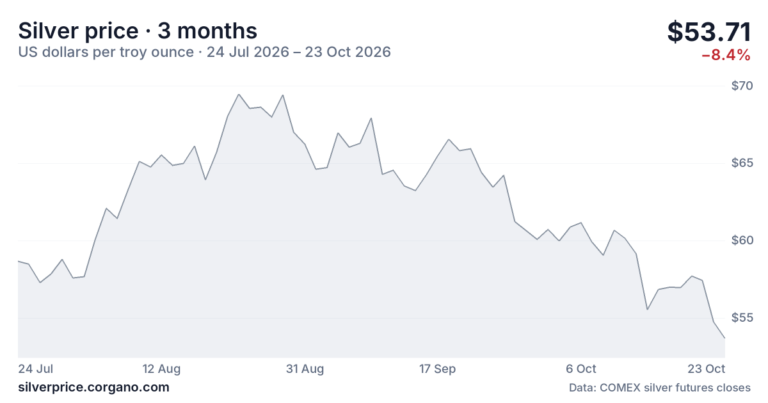
- Remember that “safe” assets move too. Many people hold gold precisely because it is no one’s liability. It has not been a smooth ride: gold is about 24% below its January record close, even after rising today.
Financial literacy here means knowing which promise stands behind each dollar you own, and what would have to fail for that promise to break.
Data: Corgano Gold Price — gold price history, as of October 28, 2026, 09:22 UTC.
Data come from the OCC, the FDIC, the Federal Reserve Bank of New York, Fitch Ratings, KBRA, Cox Automotive, the BLS and the sources linked above; market prices are from the Corgano price sites at today’s close. This article is commentary; it is not investment, tax, legal or financial advice.